
MVUS Diagrams
MVUS DIAGRAMS
Click on images to view full-sized images in another window.
THE HULL AND RIG OF VESSELS
The term rig, when applied to vessels, generally refers to the number and kind of masts and style of sails that are carried, but the term is also sometimes used indiscriminately to designate the class of hull or the complete vessel in her entirety. Thus it may be said of a vessel that she has a ship's hull with the rig of a brig, meaning that the hull may be of a build that does not correspond with the style of rig. In such cases the rig prevails over the hull in giving the name of the vessel's species, and she is called a brig; but in some compound names, as "scow-schooner," the word "scow" expresses the build of hull and the word "schooner" the style of rig. A gradual change resulting from the inventions and improvements made during the past century has been going on in the rig of American vessels as well as in those of other countries. Some new rigs have been found to be better adapted to some waters, and changes have been made to suit the increased size of vessels, which have proved to be more serviceable in certain trades. But while old rigs have been abandoned and new ones added, the names applied to them have not in all cases been uniform throughout the country. Some localities may adopt certain rigs as more desirable for certain trades, but it is important that they should be designated by the same nomenclature at all the ports. While recognizing the styles of rig where best known and adopted, in order to counteract any tendency to use local names, more especially for new rigs, a brief description of those most generally known and acknowledged is inserted here, and diagrams intended to illustrate the different styles of rig now in use are subjoined.
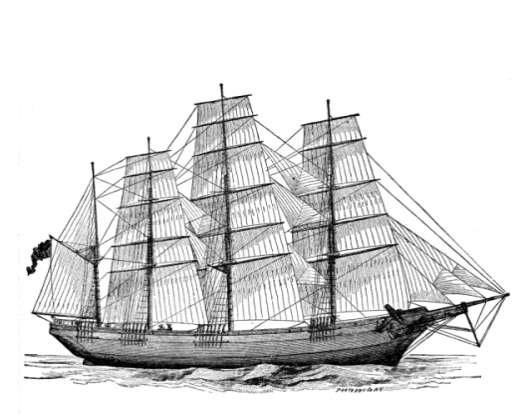
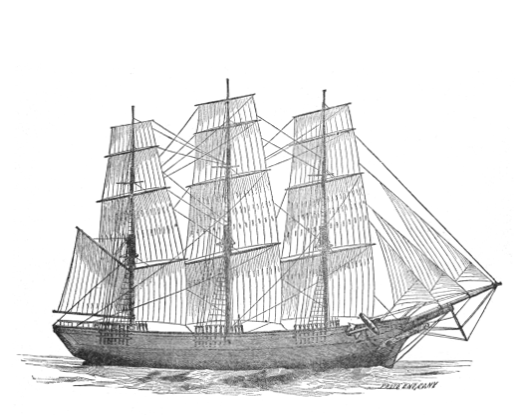
Ship
Aside from the generic name of ship, which applies to all species of vessels, we have the term applied to the rig of the largest class of sailing vessels, which has for a long period been known among sailors to designate a three-mast vessel having lower masts, topmasts, and topgallant masts with yards (square-rigged) on each mast, and having a bowsprit. The term "lofty ships" was formerly applied to all classes of square-rigged vessels. When the large, modern merchant ships began to be built the double topsail rig (which was an American invention) was introduced, and more latterly the four-mast ship, now quite common, for the long iron ships built in Great Britain. The ship carrying four masts is generally fore-and-aft rigged on the after mast. In the diagrams, No. 1 shows the modern four-mast, double-topsail ship rig, and No. 2 represents the old style whole-topsail rig.
Bark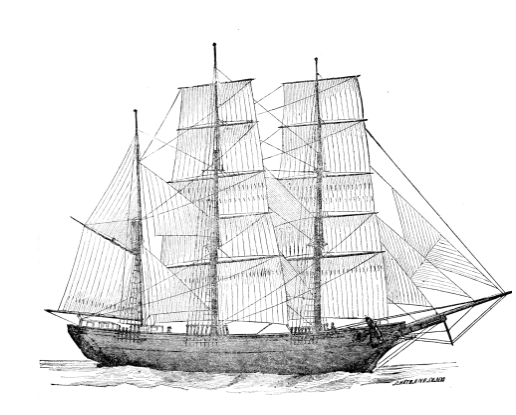
The bark or barque (from the Latin, barca) is a rig similar to that of the ship, excepting that it has only fore-and-aft sails (no yards) on the mizzen mast. Barks are common, smaller than ships, although some vessels of 1,000 to 1,500 tons are so rigged for sake of economy. They generally carry double topsails. The diagram No. 3 exhibits the ordinary modern bark rig.
Barkentine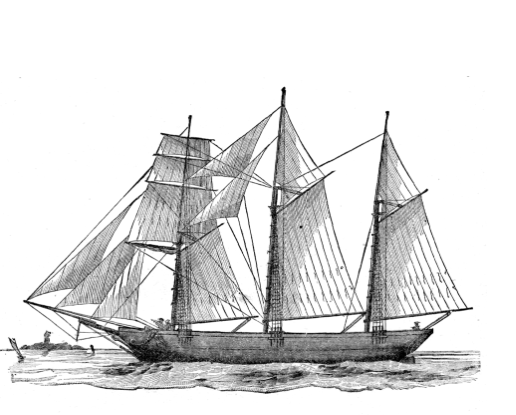
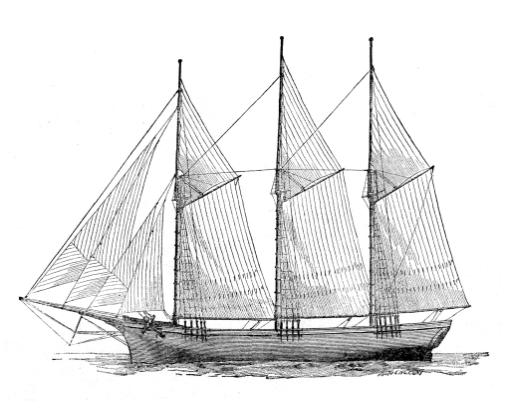
Also spelled Barkantine and Barquantine The term is derived from the word "barque," and properly signifies a small bark. The barkentine is fitted with three masts, square-rigged with yards on the foremast only, and fore-and-aft sails on the main and mizzen masts. Barkentines are generally constructed with great length in proportion to their breadth, and on the lakes are built to suit the peculiar navigation of those narrow waters. Diagram No. 4 shows the rig of the ordinary barkentine, as known in American waters.
Brig
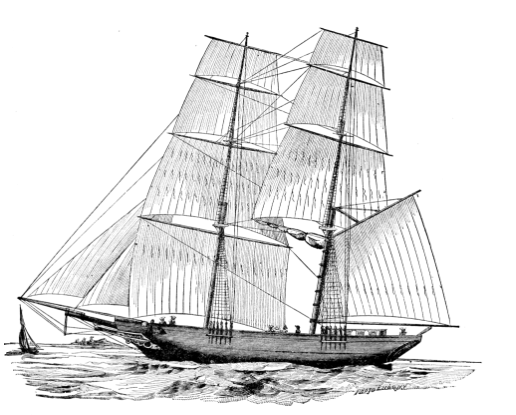
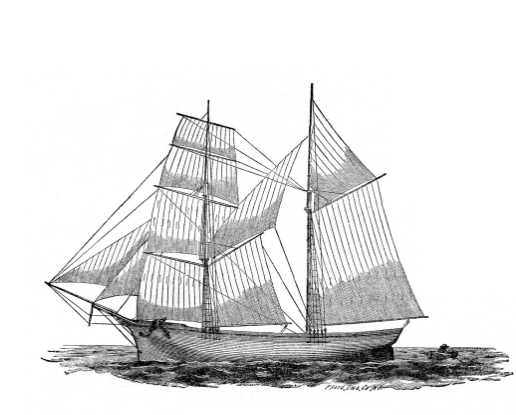
According to Admiral Smyth, this word is from the Celtic, and was first applied to ferry-boats, meaning "passage over the water." The brig is now a two-mast square rigged vessel. There are several kinds of brigs: (1) The full-rigged brig, which is a rig nearly similar to that of the snow of former times, having fore and main lower masts, topmasts, and topgallant masts, and yards on each, with or without a square mainsail, and carrying also a trysail. (2) The hermaphrodite or half brig, which is a vessel with a brig's foremast and a schooner's mainmast, square-rigged forward and fore-and-aft rigged aft. Diagram No. 5 represents the full-rigged brig, and No. 6 the hermaphrodite brig.
Brigantine
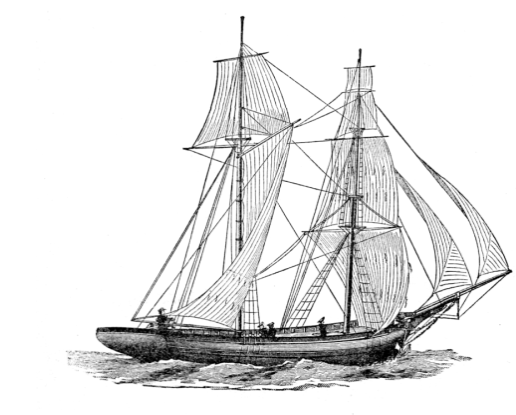
This word, which is probably a diminutive of "brig," is employed in the French to designate the fore-and-aft mainsail used in small vessels. The brigantine rig (or brig-schooner) is similar to the hermaphrodite, excepting that brigantines carry a light topsail on the mainmast above the large fore-and-aft mainsail. The term is variously applied by seamen of different European nations to a peculiar sort of vessel of their own marine. At some ports on the Pacific coast a hermaphrodite brig rigged with a large three-cornered mainsail without a gaff but an overlapping fore-and-aft topsail whose sheet hauls out to the boom is improperly called a brigantine. The brigantine rig is becoming quite rare in American waters. Diagram No. 7 is designed to illustrate a brigantine under sail.
Schooner
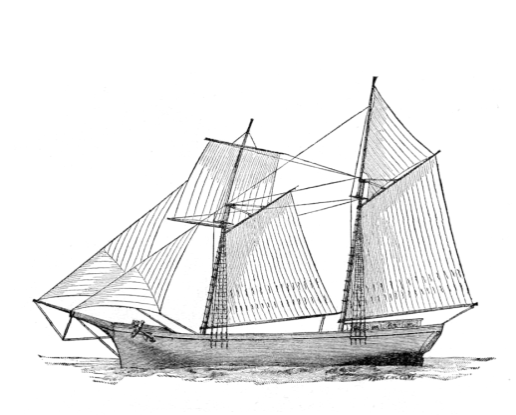
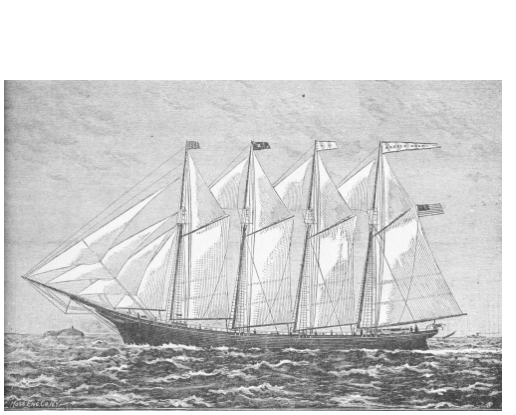
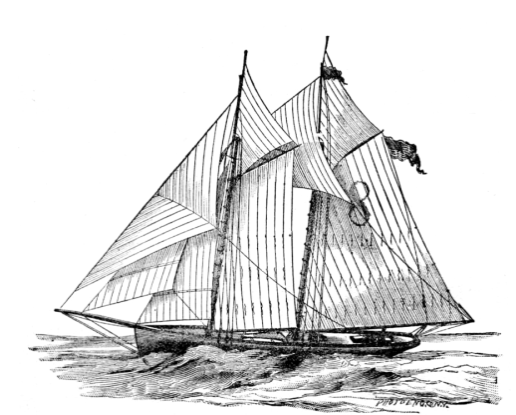
A name applied to vessels of fore-and-aft rig of various sizes. Schooners have two or more long lower masts without tops, and are sometimes fitted with light square topsails, especially at the fore: but these are giving way to the fore-and-aft gaff topsails, which are better adapted to the American coast. The schooner used to be the rig chiefly for small vessels, but some of the more modern schooners measure 800 and 1,000 tons, and carry three and four masts. In the diagrams, No. 8 represents the topsail schooner of two masts and No. 9 the fore-and-aft schooner of four masts. No. 11 gives a view of the ordinary American pilot boat, which, in most of the ports, is a small, two-mast fore-and-aft schooner-rigged vessel with pointed ends, but with suitable beam for sailing and working to windward.
Sloop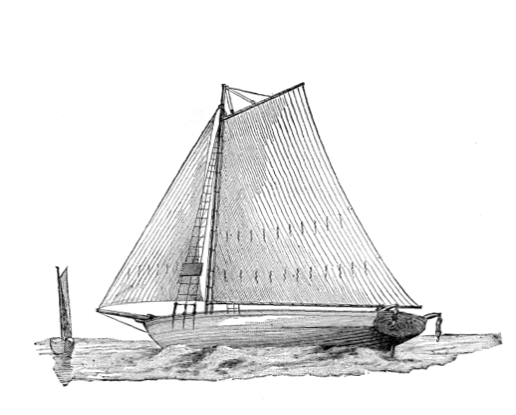
The sloop is a vessel with only one mast, and a bowsprit carrying a fore-and-aft mainsail and jib, which, being set on the forestay, is called the foresail. The sloop is one of the oldest style of vessel known to the trade of this country, and is (with some local variations in the cut of sails) a rig that is more or less employed in the commerce of the entire globe. Diagram No. 12 shows the sloop rig.
Cutter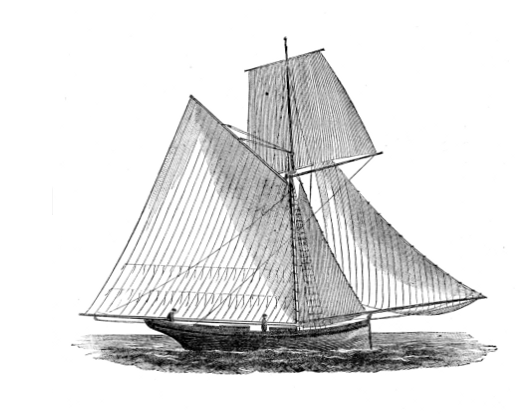
A small sloop-rigged vessel, sharp built, with a straight bowsprit running out parallel with the deck, and having large sails. She carries a fore-and-aft mainsail, stay foresail, flying jib, and topsail. Large cutters, 400 to 500 tons, have been constructed for naval use and made to carry yards with every sail that can be set on one mast, even to sky sails, moon-rakers, star-gazers, etc. The modern cutter-yacht generally carries a flying gaff topsail. The name cutter applies as much to the sharp build of the vessel's hull as to the particular rig. Diagram No. 13 affords a view of the cutter.
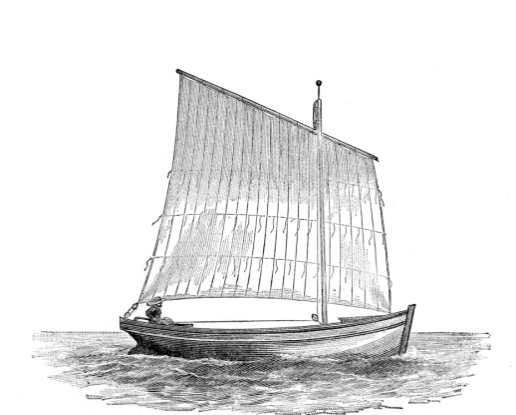
Lugger
Luggers are vessels generally with one mast (though sometimes two or three), having quadrilateral or four-cornered fore-and-aft sails bent to a hoisting yard, the luff being about two-thirds the length of the after leech. The French chasse-marée or lugger, used for fishing and coasting purposes, carries two or three masts and is of 200 to 300 tons capacity. In this country the lugger is generally a small vessel with one mast, used for the oyster trade on the Mississippi River and adjacent waters. The diagram No. 14 represents one of these vessels navigated by one man.
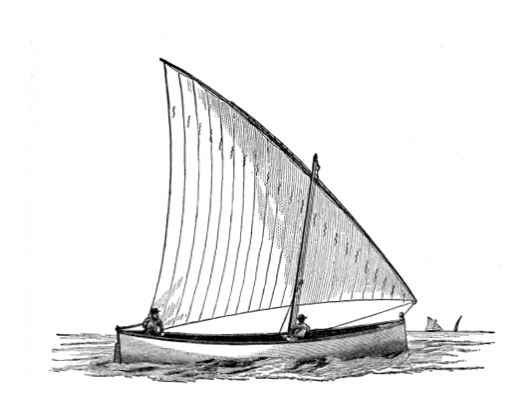
Lateen
The lateen rig is similar to the lug rig, excepting that the sail is triangular, a long yard which hoists obliquely to a stout mast forming the luff. The lateen rig is much used by small craft in the Mediterranean and in some of the larger size which have more than one mast. The sails brail up in case of need. In New Hampshire, and waters in that vicinity, there is a long, shallow boat decked the entire length and having a "cuddy" or small cabin. This vessel, which is flat-bottomed and uses a lee board, is called a gondola (gundlow) and carries a large picturesque lateen sail hoisted on a yard sometimes 60 to 70 feet in length. On the Pacific coast the lateen rig is in common use for pleasure craft and small fishing vessels. Diagram No. 15 represents one of the latter class.
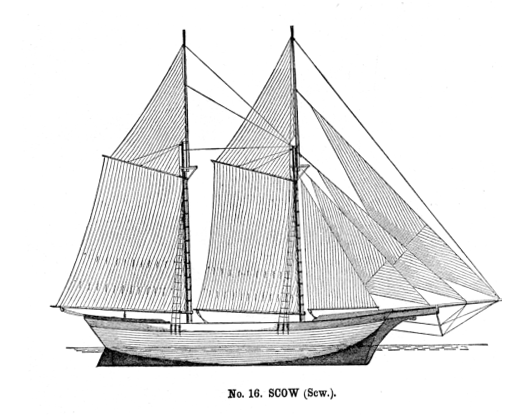
Scow
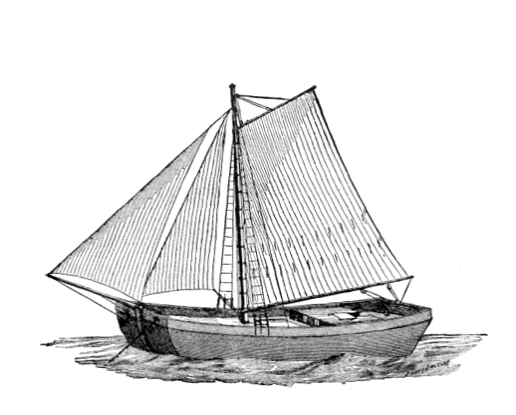
The scow is a vessel used in the shoal waters of nearly all the States, but principally on the lakes. Scows are built with flat bottoms and square bilges, but some of them have the ordinary schooner bow. They are fitted with one, two, and three masts, and are called scow sloop or scow schooner, according to the rig they carry. Some of them carry bowsprits. The diagrams No. 16 and No. 17 represent one of each class of scow. The distinctive line between the scow and regular-built schooner is, in the case of some large vessels, quite obscure, but would seem to be determined by the shape of the bilge, the scow having in all cases the angular bilge instead of the curve (futtock) bilge of the ordinary vessel.
Cat
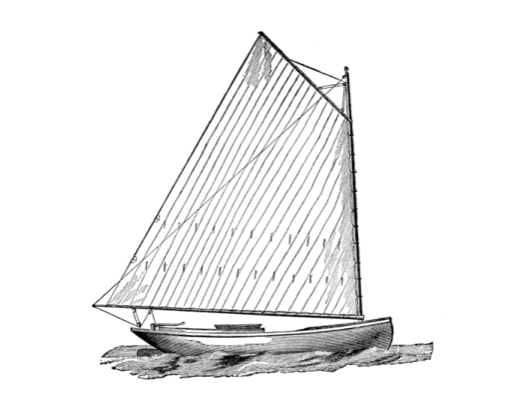
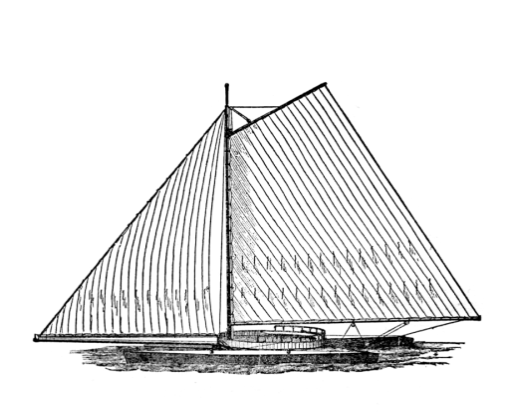
A rig supposed to be derived from the Brazilian catamaran that allows of one sail only, an enormous fore-and-aft mainsail spread by a boom and gaff and hoisted to the one mast stepped near the stem. The cat rig is much employed on Long Island Sound for small coasting and fishing vessels. It is also a favorite rig for pleasure vessels, being easily handled, but is not suited to a heavy sea and rough weather. Diagram No. 18 exhibits the cat rig.
Sharpie
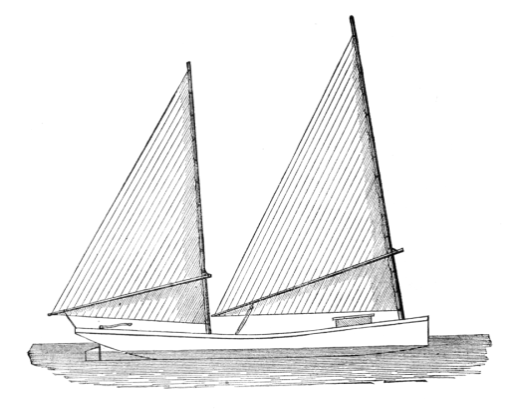
A vessel of 20 to 40 feet in length, used by the oystermen of Connecticut and New Jersey, and also for general pleasure purposes. The sharpie is built sharp, with a flat bottom, and carries a center-board. The rig of the sharpie is peculiar and the vessel might be termed a cat-rigged schooner. The diagram No. 19 shows the rig of the Connecticut sharpie. The Ohio sharpie, used on the lakes for fishing purposes, has the same rig, excepting that they generally carry gaffs.
Yawl
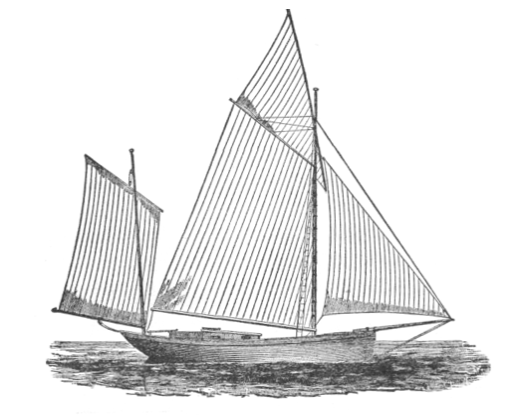
The yawl is properly a ship's boat, resembling the pinnace. It is more commonly propelled by oars, but there is a certain rig applied to them by a British customs act known as the yawl rig, and in use by some American as well as foreign yachts. It resembles the cutter rig, except that it has a jigger-mast at the stern, which carries a small, lug-sail, the main boom traversing just clear of it; many small fishing boats on the lakes now have this rig. The diagram No. 20 illustrates the yawl rig.
Catamaran
A pleasure boat constructed on the plan of the vessel of that name used on the Brazilian coast. The American catamaran has a double hull and carries the cat rig. The catamaran of the Madras and Ceylon coasts is made of three logs 20 to 30 feet long, 2 to 3 feet apart, secured by spreaders and lashings. They carry large sails and are very fast sailers. Diagram No. 21 is designed to represent the catamaran as rigged on the Atlantic sea-board.